
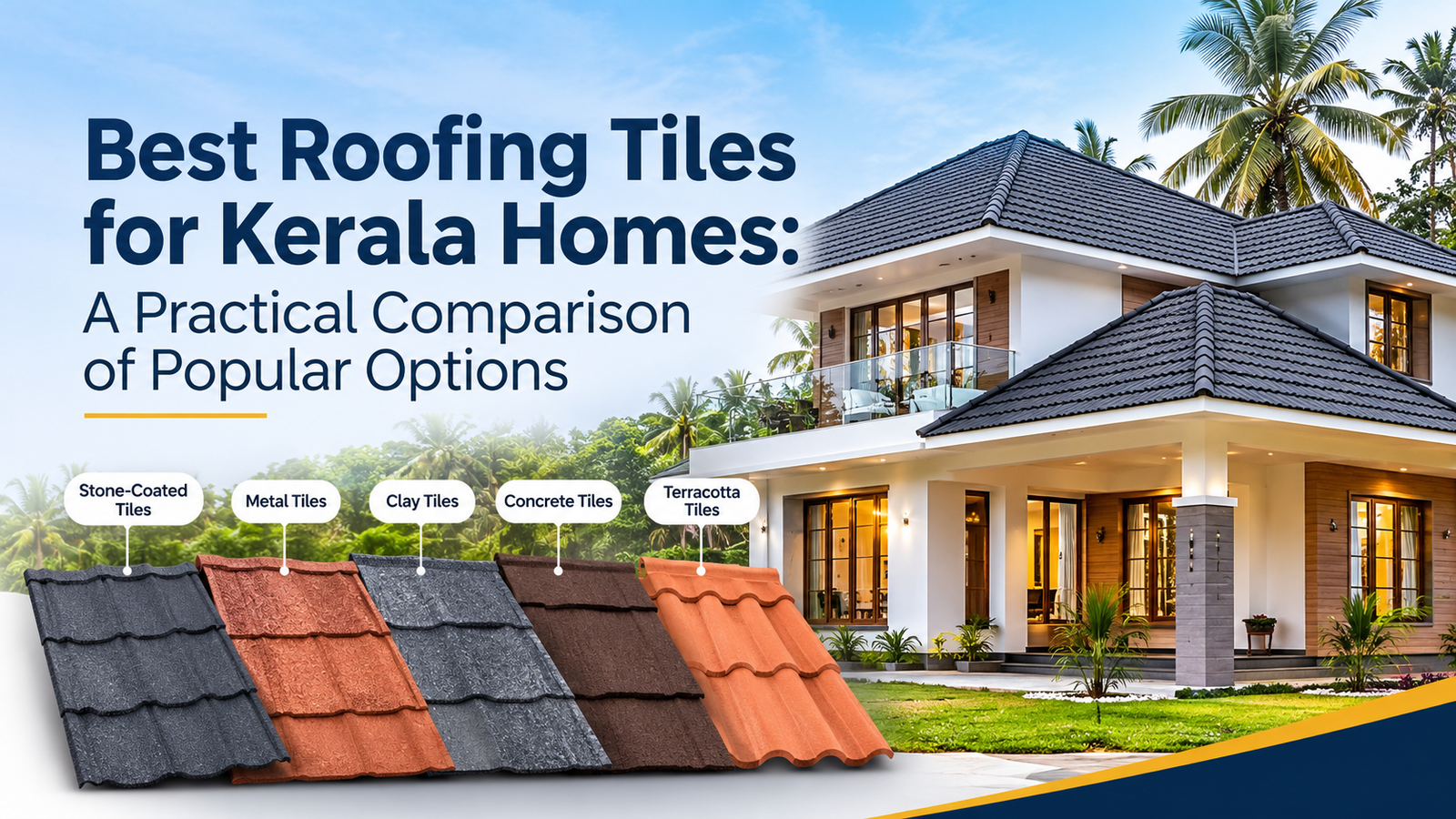
Choosing the best roofing tiles in Kerala comes down to one question: which roof can handle months of heavy monsoon rain and then fierce summer heat, year after year? Building or renovating a home here is a personal journey, and the roof is one of the most important choices you will make.
Traditional Kerala homes used sloped roofs with baked clay tiles (Nadan Oodu). Sloped roofs drain rainwater quickly and give homes their classic look. Today you can also choose modern ceramic tiles, concrete tiles, shingles and stone-coated metal roofing. This guide compares the five most popular options on weight, moss resistance, impact strength and upkeep, so you can decide what suits your budget and your home.
Roofing tiles for Kerala homes at a glance

1. Stone-coated metal roofing
Stone-coated metal roofing has a steel core coated with a zinc-aluminium alloy, sealed with acrylic resin and finished with crushed stone granules. It has become a popular choice for modern Kerala homes that want strong monsoon protection without a heavy roof.
Pros
Very light: at about 6–7 kg per square metre, it weighs a fraction of clay or concrete. A lighter roof can be carried on a lighter truss frame.
Handles impact: clay and ceramic tiles can crack under falling coconuts or foot traffic. The metal base flexes to absorb the blow instead.
Built for monsoon wind and rain: panels interlock and are fixed to the frame, which helps keep out wind-driven rain and resist uplift in storms.
Low upkeep and quieter than bare metal: the sealed stone surface resists moss, algae and UV fading, and the granules soften the sound of rain.
Cons
Higher material cost: stone-coated panels cost more per square metre than basic clay tiles. A lighter frame can offset part of that.
Best for: modern and fusion homes, and homeowners who want a light, durable roof that stands up to heavy monsoons and falling debris.
2. Traditional clay tiles (Nadan Oodu)
Terracotta tiles are part of Kerala's architectural heritage. Made from natural burnt clay, these red tiles have covered ancestral homes for generations.
Pros
Natural insulation: clay helps keep rooms cooler on hot afternoons.
Timeless look: a rustic finish that suits Kerala's green surroundings.
Cons
High upkeep: clay absorbs moisture, so moss and algae build up during the monsoon and need regular cleaning.
Heavy and brittle: at about 30–45 kg per square metre, clay needs a strong frame. Single tiles can break under falling coconuts or foot traffic and can be lifted by strong winds.
Best for: heritage restorations and traditional homes where an authentic terracotta look matters most.
3. Glazed ceramic roofing tiles
Ceramic tiles are made from refined clay fired at very high temperatures and coated with a protective glaze, which gives a glossy, modern finish.
Pros
Resists water and moss: the glaze absorbs very little water, so moss and algae struggle to grow.
Holds its colour: resists fading under strong tropical sun.
Cons
Heavy: like clay, ceramic tiles need a strong supporting frame.
Brittle: they handle weather well but can crack if stepped on or hit by falling debris.
Best for: traditional-modern homes that want a glossy finish with less moss cleaning than clay.
4. Concrete roofing tiles
Concrete tiles are pressed from sand, cement and pigment, and are common in newer suburban homes.
Pros
Solid and durable: handles heavy downpours and comes in flat or wavy profiles.
Many shades: darker colours suit modern exteriors.
Cons
Very heavy: one of the heaviest roofing materials, which adds to frame and foundation costs.
Holds heat and damp: can stay warm into the evening and absorb moisture once the surface coating wears.
Best for: multi-storey homes with strong concrete and steel structures.
5. Metal sheets and asphalt shingles
Coated corrugated sheets (GI or uPVC) and asphalt shingles are other lightweight options.
Pros: light, and easy to fit over curved or multi-gable roofs.
Cons: bare metal sheets get very hot and loud in heavy rain. Asphalt shingles need a solid plywood or concrete deck underneath, which adds to the total cost.
Best for: carports, utility terraces and unusual roof shapes.
How to choose the best roofing tiles in Kerala for your home
Work out frame costs early. Roof weight decides how strong, and how expensive, your truss frame needs to be. Heavy tiles need a heavier frame; lightweight stone-coated metal needs less steel.
Think about your surroundings. If your plot is surrounded by trees or near water, humidity stays high. Non-porous roofs such as stone-coated metal or glazed ceramic resist moss best.
Plan the right slope. Kerala roofs need a steep enough pitch to clear monsoon rain quickly. Steeper slopes drain faster.
Count long-term upkeep. Clay needs regular cleaning and can break under falling coconuts. Stone-coated metal is designed to resist both impact and fungal growth.
Which roof is right for you?
There is no single best roof for every Kerala home. It depends on your budget, your structure and how much upkeep you are willing to do. For heritage charm and natural cooling, traditional clay is still a classic. For a glossy, fade-resistant finish, glazed ceramic works well.
For modern Kerala homes that want strong protection against heavy monsoons, storm winds and falling coconuts without a heavy frame, stone-coated metal roofing offers a good balance of durability, weight and looks. Explore Kudkys stone-coated roofing profiles or talk to our team to find the right one for your home.
Frequently asked questions
What are the best roofing tiles in Kerala for heavy monsoon rain?
Stone-coated metal roofing and glazed ceramic tiles handle Kerala's monsoon best because their sealed surfaces absorb very little water. Clay tiles absorb moisture and need more cleaning after each monsoon.
Which roofing material stops moss growth in Kerala?
Stone-coated metal roofing and glazed ceramic tiles resist moss and algae best. Their non-porous surfaces let rainwater run off instead of soaking in, so moss has little damp surface to grow on.
Is stone-coated metal roofing noisy in heavy rain?
Stone-coated metal roofing is much quieter than bare metal sheets. The stone granule surface softens the impact of raindrops, so heavy rain sounds like a soft patter rather than drumming.
Can stone-coated metal roofing withstand falling coconuts?
Stone-coated metal roofing is designed to flex under impact rather than crack. Clay, ceramic and concrete tiles are more likely to break when hit by a falling coconut or branch.
How much lighter is stone-coated metal roofing than clay tiles?
Stone-coated metal roofing weighs about 6–7 kg per square metre. Traditional clay tiles weigh about 30–45 kg per square metre, so the supporting frame for a metal roof can be lighter.
Can roofing be added over an existing concrete slab roof?
Yes, many Kerala homes add a sloped roof over a flat concrete slab, often called a double roof. A light frame topped with stone-coated metal or tiles shields the slab from monsoon rain and summer heat, keeping the top floor cooler.
What roof slope is recommended for Kerala homes?
Kerala roofs usually need a pitch of about to clear heavy rain quickly. A steeper slope drains water faster and lowers the risk of seepage at joints.
What affects the cost of a new roof in Kerala?
The cost of a roof in Kerala depends on the roofing material, the roof area, the slope and the strength of the frame it needs. Heavier tiles need a stronger frame, which adds to the total cost.
Does Kudkys Roofings install roofs?
Kudkys Roofings supplies roofing products and does not provide installation.