
Best Stone Coated Metal Roofing for Kerala Homes: How It Beats Clay Tiles
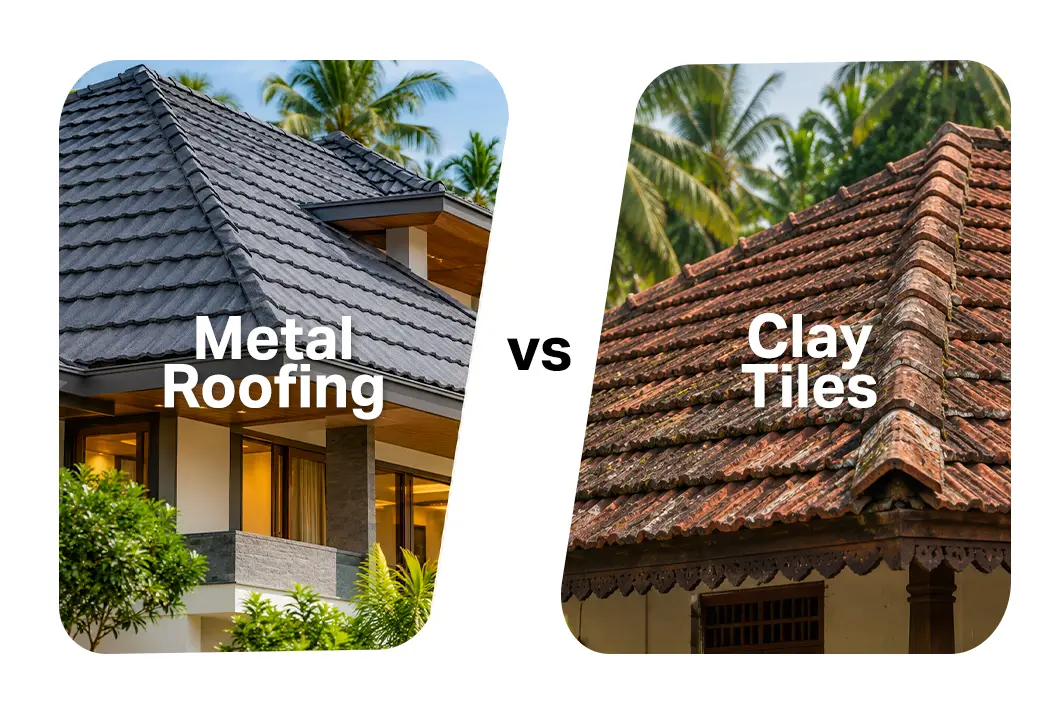
Kerala roofs face months of sideways monsoon rain, salty coastal air, and fierce summer heat. The best stone-coated metal roofing handles all three while weighing a fraction of traditional clay tiles. Clay has served Kerala homes for generations, but stone-coated metal now gives homeowners a lighter, lower-maintenance roof with the same sloped, tiled look.
This guide explains what separates a quality stone-coated roof from a cheap one, then compares it with clay on rain, heat, noise, weight, and design. If you are comparing stone-coated roofing sheets in Kerala, start with the checklist below.
What Makes the Best Stone Coated Metal Roofing?
Not every stone-coated roof performs the same. Four things decide how long it lasts on a Kerala home.
Steel core and aluminum-zinc coating
A stone-coated panel is a steel sheet coated with an aluminum-zinc alloy, then a resin layer and natural stone chips. Ask for the steel thickness and the coating weight (for example, AZ150 means 150 g/m² of alloy). Thicker steel and a heavier coating resist dents and rust better, which matters within a few kilometres of the coast.
Stone chip bonding and finish
The stone granules should be bonded firmly with an acrylic resin and sealed with a clear overglaze. Rub a sample: chips falling off your hand are a warning sign. Ask whether the color comes from the natural stone or from paint, as painted chips can fade faster.
Interlocking profile and fixing system
Quality panels interlock on all four sides and are screwed or nailed to timber or steel battens. Ask for the manufacturer's wind and water test data rather than relying on general claims.
Warranty and after-sales support
A long manufacturer warranty is only useful if a local supplier stands behind it and honours claims. Kudkys Roofings offers a 50 year warranty on all products, supplied across India.
Monsoons, Salt Air, and Storm Winds
When the monsoon hits, Kerala does not just get rain. It gets sideways torrents, gusty local winds, and months of continuous dampness. Traditional clay tiles rely on sheer weight and interlocking shapes to shed water, and clay does not corrode along the coast. However, strong storm winds can dislodge loose clay tiles and leave the roof open to sudden leaks.
Stone-coated metal roofing takes an engineered approach to severe weather. Each panel has a steel core protected by an aluminum-zinc coating, an acrylic resin layer, and crushed natural stone chips. The panels interlock and fasten directly to the battens, so they resist wind uplift far better than loose-laid clay tiles. With the right flashings and fixings, the roof sheds heavy monsoon rain without leaks. A heavier alloy coating and sealed edges help it withstand salty coastal air.
Beating the Kerala Heat Without High AC Bills
Summer in Kerala is an endurance test, so indoor comfort matters. Clay has high thermal mass: it absorbs heat slowly during the day and releases it after sunset.
Bare metal sheets act like ovens, but stone-coated metal roofing behaves very differently. The stone chip layer scatters direct sunlight instead of passing it straight into the home. Because the panels sit on battens, an air gap forms underneath that slows heat transfer. Paired with underlayment or ceiling insulation, a stone-coated metal roof keeps living spaces cooler and helps cut AC costs through the summer.
Rain Noise: Does a Stone Coated Roof Stay Quiet?
There is a big difference between sleeping through a soothing rainstorm and feeling like you are inside a drum. Clay tiles dampen sound naturally because of their weight.
Many homeowners worry that any metal roof will be noisy in the monsoon. Stone-coated metal roofing avoids the harsh metallic echo of plain tin sheets. The textured stone surface absorbs the impact of heavy raindrops and softens sharp pings into a low, steady sound.
Weight, Moss, and Maintenance
Every home builder in Kerala soon learns about roof loads and fungal growth. Clay tiles weigh about 30–45 kg per square metre, which calls for a heavier, more expensive roof structure. In humid weather, clay absorbs moisture, darkens, and grows slippery moss or algae that needs regular, risky cleaning. Clay tiles are also brittle and can crack under a falling coconut or foot traffic.
This is where stone-coated metal roofing stands out:
- Lightweight: about 6–7 kg per square meter, roughly 80–85% lighter than clay tiles. That allows lighter, more cost-effective roof trusses without compromising safety.
- Low maintenance: the sealed acrylic surface resists moss, algae, and fungus far better than porous clay, so the roof keeps its look for years with little upkeep.
- Impact resistant: the steel core dents rather than cracks, so falling coconuts or branches do not leave broken tiles behind.
Design Options: Modern Profiles vs Heritage Terracotta
Kerala architecture is enjoying a golden age of fusion, blending modern design with sloped rooflines inspired by traditional Padippuras and Nalukettus. Clay tiles offer a classic terracotta look but limited styles and colors.
Stone-coated metal roofing offers far more choice. Profiles range from classic Spanish-style tiles to sleek slate and wood-shake looks. Colors include charcoal grey, forest green, deep red, and earthy brown, so homeowners and architects can match contemporary palettes. See the stone-coated roof tile profiles and colors Kudkys Roofing stocks.
Stone-Coated Metal Roofing vs Clay Tiles at a Glance
| Factor | Stone-coated metal roofing | Clay tiles |
|---|---|---|
| Weight | About 6–7 kg/m² | About 30–45 kg/m² |
| Wind resistance | Interlocked and fixed to battens | Can be dislodged by strong gusts |
| Heat | Stone chips scatter sunlight; a batten air gap insulates. | High thermal mass; releases heat after sunset |
| Rain noise | Stone layer muffles rain. | Naturally quiet |
| Moss and algae | A sealed surface resists growth. | Porous; darkens and grows moss |
| Impact | Steel dents rather than cracks | Brittle; cracks under coconuts |
| Design | Many profiles and colors | Classic terracotta |
Which Roof Should You Choose?
Choose stone-coated metal roofing if…
- You want the classic look of a sloped, tiled roof without the structural weight and framing cost of clay.
- Your home is near trees, where falling coconuts or branches are a regular hazard.
- You want a durable, low-maintenance roof that resists moss, stands up to monsoon winds, and comes in modern colors.
- You want an engineered roofing system built to last for decades.
Choose clay tiles if…
- You are building a strictly heritage-style home where authentic unglazed terracotta is the top priority.
- You prefer traditional heavy materials and accept the higher framing cost.
Both materials have a place in Kerala. For most modern homes that want a sloped, tiled look with less structural weight and less upkeep, stone-coated metal roofing is the stronger choice. The best result starts with a well-specified product from a supplier who stands behind it.
Want a price for your roof? +91 9745477770, +91 9745477752, +91 9745477750 or request a roofing quote.
Frequently Asked Questions
What is the best stone-coated metal roofing for Kerala homes?
The best stone-coated metal roofing for Kerala has a thick steel core, a heavy aluminum-zinc coating, and firmly bonded natural stone chips. Coastal homes benefit most from a heavier coating, because salt air speeds up corrosion.
What should I check before buying stone-coated roofing sheets?
Check the steel thickness, the aluminum-zinc coating weight, and the warranty terms in writing. Ask the supplier for wind and water test data for the profile.
How long does a stone coated metal roof last?
A stone-coated metal roof lasts for decades when the product is well specified. Kudkys Roofings provides 50 years on all products.
Is stone-coated metal roofing good for heavy Kerala monsoons?
Stone-coated metal roofing handles heavy monsoons well because the panels interlock and are fixed to the battens. Clay tiles shed water well but can be dislodged by strong gusts.
Does a stone-coated metal roof make a house hotter?
A stone-coated metal roof does not make a house hotter than a clay roof when it is laid on battens with a ventilated air gap. The stone chip layer scatters sunlight, and the air gap under the panels slows heat transfer. Adding underlayment or ceiling insulation improves comfort further.
Is stone-coated metal roofing noisy in the rain?
Stone-coated metal roofing is much quieter than plain metal sheets. The stone granule layer absorbs the impact of raindrops and softens the sound.
How much does stone-coated metal roofing cost in Kerala?
The cost of stone-coated metal roofing in Kerala depends on the roof area, the profile, and the accessories needed. Kudkys Roofings gives a written quote for the materials based on your roof measurements and chosen profile.
Stone-coated metal roofing vs clay tiles: which is cheaper overall?
Stone-coated metal roofing often costs less overall than clay tiles, because its light weight allows a lighter roof structure. Clay tiles cost more to maintain over time, as they need moss cleaning and broken-tile replacement. The final comparison depends on the house design and the products chosen.
What warranty does Kudkys Roofings offer on stone-coated roofing?
Kudkys Roofings supplies Roofing sheets with 50 years warranty, subject to the manufacturer's conditions. The manufacturer's warranty may require the roof to be fitted to its guidelines. Kudkys Roofings cannot guarantee performance if the roof is later altered or damaged by others.